
Reducing Administrative Cost and Risk in Care
)
For care leaders, cost control and regulatory responsibility are now inseparable. Providers are expected to demonstrate strong governance, accurate records, and operational oversight, while operating within increasingly constrained budgets.
One of the most persistent and expensive challenges sits in administration.
Across care organisations, registered managers and senior leaders rely on back-office teams to manage onboarding, compliance documentation, system updates, audits, and reporting. Much of this work remains manual and repetitive, requiring data to be checked and re-entered across emails, PDFs, spreadsheets, and portals.
This manual effort drives cost in several ways. It increases the need for administrative headcount, creates reliance on experienced individuals, and limits scalability. During periods of growth, high staff turnover, or inspection activity, these costs rise further as teams are stretched, and errors become more likely.
Administrative inefficiency also creates regulatory risk. Incomplete records, delayed updates, or inconsistent processes can quickly surface during CQC inspections, even where care delivery itself is strong. For leaders, this creates a dual problem: higher operating costs alongside increased compliance exposure.
Historically, providers have attempted to manage this by hiring additional administrators or outsourcing work. While this can provide short-term relief, it often adds cost without addressing the underlying inefficiency, and can introduce challenges around consistency, training, and oversight.
As a result, many care leaders are now exploring automation as a way to reduce administrative cost while strengthening governance.
meet DWIGHT provides a digital worker bot designed to automate back-office tasks in regulated, admin-heavy environments such as care. Rather than replacing systems or changing how teams work, DWIGHT operates on top of existing technology, completing tasks in the same way a human administrator would, but 24/7, doing the work of up to 12 people, yet at a fraction of an FTE cost.
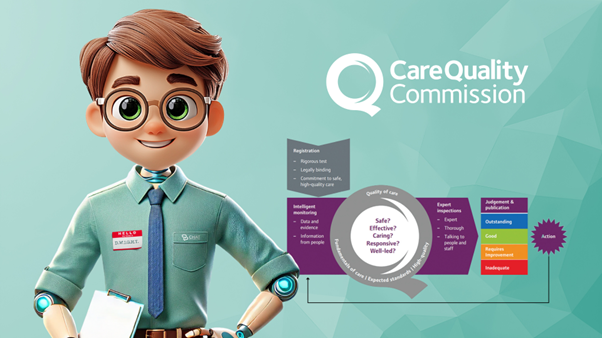
In a care setting, this can include automating onboarding workflows, processing and checking compliance documentation, updating internal systems, and handling repeatable back-office processes. By removing manual effort from these activities, providers can reduce reliance on additional headcount, improve consistency, and create cost efficiencies that scale as the organisation grows.
Importantly, DWIGHT supports governance rather than bypassing it. He follows each provider’s policies, maintains clear audit trails, and flags exceptions for human review. This helps leaders demonstrate control and accountability under the CQC’s Well-Led domain, while reducing ongoing administrative cost.
For senior decision-makers, the focus is shifting. Reducing administrative cost is no longer about trimming budgets, but about building sustainable, compliant organisations that can operate efficiently without placing further strain on people or finances.
“Administrative cost in care is not just a financial issue. It is a governance and resilience issue.”
See DWIGHT in action
Scan the QR code to view a short demonstration showing how a digital worker bot can automate back-office tasks in care, helping providers reduce administrative cost while maintaining strong compliance and oversight.
